How Do I Choose an RO Plant Manufacturer in Patna?
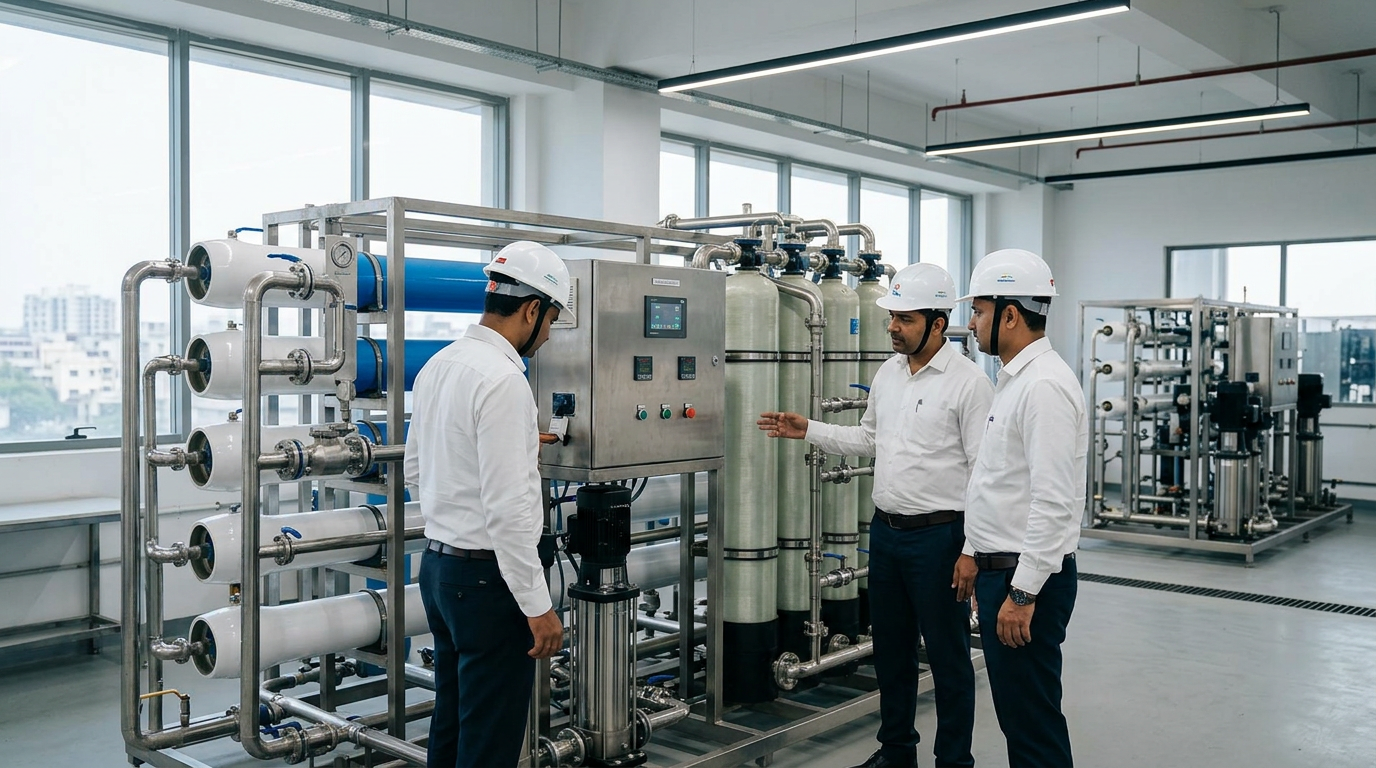
Did you know a reverse osmosis system can remove over 90% of all dissolved impurities from water? That’s a powerful level of purification, essential for many industries, from food processing to pharmaceuticals. If your business needs this kind of water quality, you're likely searching for a reliable RO plant solution. But finding the right manufacturer involves more than just a quick search. You need someone who understands your specific requirements, offers transparent pricing, and provides solid after-sales support.
Here are the answers to some of the most common questions businesses ask when looking for an RO plant partner.
What's the typical cost for a commercial RO plant?
This is usually the first question, and the answer is: it varies widely. A small, basic 250 LPH (Liters Per Hour) plant might start around ₹65,000 to ₹80,000. A larger, more automated 1000 LPH plant could range from ₹1.5 lakh to ₹2.5 lakh or more.
Several factors influence the final price:
- Capacity (LPH): The more purified water you need per hour, the bigger and more expensive the system.
- Raw Water Quality: Water with high Total Dissolved Solids (TDS) requires more powerful pumps and robust pre-treatment, increasing the cost.
- Automation: Fully automatic plants that run and clean themselves cost more than manual or semi-automatic ones.
- Components: The brand and quality of membranes, pumps, and vessels play a significant role in the price and long-term reliability.
Always ask for a detailed, itemized quote. A professional manufacturer will break down the costs for you.
How long does the entire installation process take?
From your first call to having a running plant, the timeline depends on the system's complexity. For a standard commercial RO plant, you can generally expect the process to take 2 to 4 weeks.
Here’s a rough breakdown:
- Consultation & Water Testing: 1-2 days. A technician visits your site and takes a water sample for lab analysis.
- System Design & Quotation: 2-4 days. Based on the water report and your needs, the manufacturer designs a system and provides a quote.
- Fabrication: 1-3 weeks. Once you approve the design, the team builds the plant at their facility.
- Installation & Commissioning: 2-4 days. The finished system is transported to your site, installed, and tested to ensure it's producing water of the desired quality.
How do I figure out the right plant capacity?
Choosing the right capacity is crucial. Too small, and you'll have water shortages. Too big, and you've wasted money on an underutilized system. The key metric is Liters Per Hour (LPH).
To get a rough idea, calculate your total daily water requirement and divide it by the number of hours your plant will operate. For example, if your facility needs 8,000 liters of purified water during a 10-hour workday, you'd need an 800 LPH plant (8000 ÷ 10). It's always wise to add a 20-25% buffer for peak demand and future growth, so a 1000 LPH plant would be a safe bet.
A good RO plant manufacturer in Patna will help you with this calculation during their initial site assessment.
What are some warning signs of an unreliable supplier?
Unfortunately, not all suppliers are created equal. Watch out for these red flags:
- Vague Quotes: If a quote just says "1000 LPH RO Plant" with a single price, ask for a detailed breakdown of every component.
- One-Size-Fits-All Approach: If they offer a solution without testing your water or asking about your specific use case, they aren't tailoring the plant to your needs.
- No References: A reputable company will happily provide you with a list of past clients. If they can't or won't, be cautious.
- High-Pressure Sales: A professional focuses on finding the right solution, not just closing a sale immediately.
The best RO plant manufacturers in Patna lead with technical expertise, not just a low price.
Is the raw water quality here in Patna a big deal?
Yes, it's a huge deal. The water quality from a borewell or municipal supply can vary significantly across different areas of Patna. Some areas have high hardness, while others have high iron or TDS levels.
The raw water chemistry determines the entire design of the RO plant. For instance, high TDS requires a high-pressure pump and specific membranes. Hard water requires a water softener as part of the pre-treatment to prevent scaling on the RO membranes, which can destroy them quickly. Any manufacturer who doesn't insist on a detailed water analysis report is cutting corners.
What kind of maintenance does an RO plant need?
An RO plant isn't a "set it and forget it" machine, but the maintenance is manageable. Proper care ensures a long life and consistent water quality.
- Daily: Check pressure gauges and flow meters to ensure the system is running within its designed parameters.
- Weekly: Check pre-treatment filters and backwash them if needed. Ensure chemical dosing tanks (like anti-scalant) are full.
- Periodically: The RO membranes will need to be chemically cleaned (a process called CIP) every 3 to 6 months, depending on usage.
- Long-Term: RO membranes typically need replacement every 3-5 years. Pre-treatment media might need changing every 2-3 years.
Most manufacturers offer an Annual Maintenance Contract (AMC), which is a great way to ensure your plant is professionally serviced and stays in top condition.

Comments
Post a Comment