Your Questions on 1000L Water Chiller Prices in Panchkula
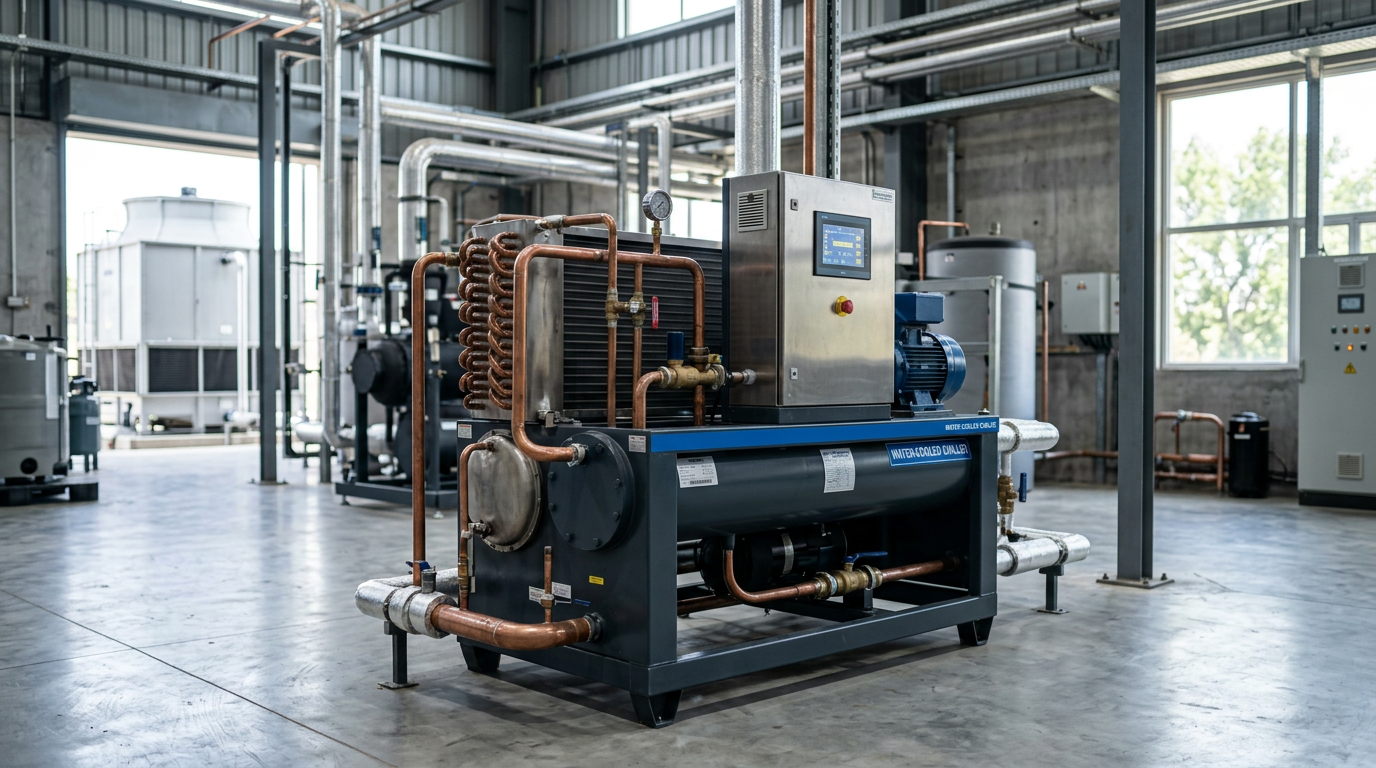
Many business owners make a critical error when researching cooling solutions: they focus solely on the upfront cost. A low initial price tag can be tempting, but it often masks hidden expenses related to energy consumption, maintenance, and installation complexities. To make a truly informed decision for your facility, you need a holistic view of what a complete water chiller system Panchkula involves. This guide addresses the key questions we hear from clients, moving beyond just the sticker price to cover total cost of ownership and operational value.
Unpacking the Total Cost of a 1000L Water Chiller System
The most common starting question is about price, but the final answer is a sum of several critical parts. A quality 1000-liter (approximately 3 TR) water-cooled chiller unit typically costs between ₹1,50,000 and ₹3,00,000. This wide range is not arbitrary; it reflects crucial differences in technology, materials, and efficiency that directly determine your long-term operational expenses and the system's reliability. However, the unit's price is only the beginning. A complete, functional system requires a budget that accounts for all necessary components and services.
Key drivers of the chiller unit's cost include:
- Compressor Technology: For a 3 TR system, scroll compressors are a reliable and common choice, offering good efficiency. However, investing more in an advanced screw compressor can yield significant returns. Screw compressors excel at partial-load efficiency, meaning they consume far less power when your cooling demand is not at its peak. Since most facilities operate under partial load conditions for much of the day, the long-term energy savings can be substantial.
- Condenser and Evaporator Materials: Heat exchangers, the heart of the chiller, can be either shell-and-tube or plate-type. The materials used, such as copper or stainless steel, also affect the price. Copper offers excellent thermal conductivity, but stainless steel provides superior resistance to corrosion, potentially extending the unit's lifespan in environments with challenging water quality.
- Energy Efficiency Rating (EER/COP): A chiller with a high EER (Energy Efficiency Ratio) or COP (Coefficient of Performance) will have a higher initial cost. This premium, however, is an investment in lower future electricity bills. Given the commercial power rates in Panchkula, the payback period for a high-efficiency model is often just a few years.
- Brand and Origin: Established domestic and international brands command higher prices. This is due to their proven track records for reliability, superior build quality, robust R&D, and, critically, accessible after-sales support and spare parts availability.
Beyond the chiller unit itself, a complete project budget must include these essential associated costs:
- Installation and Labor: This is a significant cost, often adding 15-25% of the unit price. It covers the skilled technicians needed for placing the unit, all piping work, electrical connections, and integrating the system with your process equipment.
- Cooling Tower: A water-cooled chiller cannot function without a cooling tower to dissipate the heat removed from your process. This is a separate piece of capital equipment with its own costs for the unit, installation, and plumbing.
- Pumps and Piping: A set of correctly sized, robust pumps is required to circulate water between the chiller, your application (e.g., molds, tanks), and the cooling tower. The budget must also account for insulated piping, valves, and fittings to prevent energy loss and condensation.
- Water Treatment: The water circulating in the open loop of the cooling tower and the closed loop of the chiller must be chemically treated. This prevents scale, corrosion, and biological growth (like algae) that can cripple system efficiency and damage components. A basic water treatment system is a small investment that protects the entire, much larger one.
- Electrical Panel and Cabling: A 3 TR chiller is a significant electrical load that requires a dedicated electrical panel, safety switchgear, and heavy-gauge cabling installed by a qualified electrician to comply with safety standards.
Navigating the Purchase and Installation Journey
Choosing and installing the right chiller system is a multi-step process that requires careful planning. From identifying the right technology for your needs to understanding the fine print in a quote, every step is critical for a successful outcome.
First, you must determine if a water-cooled chiller is the right fit. While air-cooled chillers are simpler, water-cooled systems offer clear advantages in specific scenarios:
- Your Energy Bills Are Too High: Water-cooled chillers are fundamentally more energy-efficient. Their performance is not dependent on fluctuating ambient air temperatures, which is a major benefit during Panchkula's hot summers. This leads to lower, more predictable electricity consumption.
- You Need Consistent, Precise Cooling: Industrial processes in sectors like pharmaceuticals, plastics manufacturing, and food processing demand unwavering temperature stability for product quality. Water-cooled systems deliver this consistent cooling performance year-round.
- You Have a Large or Centralized Cooling Load: For larger facilities or demanding applications, the superior efficiency of water-cooled systems provides cooling at a much lower operational cost per ton of refrigeration, making them the more economical choice at scale.
A professional and transparent quote is your roadmap for the project. An unclear quote is a major red flag. Insist that any proposal includes:
- Itemized List of Equipment: The brand, model, and capacity of the chiller, cooling tower, and pumps must be clearly specified. Vague descriptions are unacceptable.
- Breakdown of Costs: Look for separate line items for equipment, installation labor, materials (piping, cables), and freight. This prevents hidden charges.
- Detailed Scope of Work: The document must define what is included (e.g., core drilling, stand fabrication) and what is excluded (e.g., civil work, permits).
- Clear Warranty Information: The warranty for the chiller components (especially the compressor) and the installation workmanship should be stated separately.
- Payment Terms: A clear schedule for advance, post-installation, and final commissioning payments should be mutually agreed upon.
Once a decision is made, a typical installation follows a clear timeline. For a 1000L system in the Panchkula area, a standard project from the first day on-site to a fully running system takes about one week, broken into these phases:
- Site Assessment and Planning (1-2 Days): Technicians visit to finalize the location, map out piping routes, and confirm electrical requirements.
- Equipment Delivery (1-2 Weeks): Lead time can vary depending on whether the model is a stock item or a custom configuration.
- On-Site Installation (3-5 Days): The core work of mounting the chiller and cooling tower, running pipes, and completing all electrical work.
- Commissioning and Testing (1 Day): The system is filled, checked for leaks, and performance-tested under load to ensure it meets specifications before handover.
Maximizing ROI Through Proactive System Maintenance
Buying a high-quality, energy-efficient chiller is only half the battle. Protecting that investment and realizing its long-term value depends entirely on diligent, professional maintenance. Neglecting your chiller is a surefire way to increase operational costs and shorten its lifespan. The Total Cost of Ownership (TCO) is not just the purchase price; it's the sum of the initial investment plus all energy and maintenance costs over the system's life.
Without routine servicing, the internal surfaces of the heat exchangers will inevitably accumulate scale, sludge, and biological fouling. This buildup acts as an insulator, forcing the compressor to work progressively harder—and consume more electricity—to achieve the same cooling effect. It's not uncommon for a chiller's efficiency to degrade by 20-30% within a couple of years due to poor maintenance, completely negating the benefits of having purchased a high-efficiency unit. In the worst cases, this strain can lead to premature compressor failure, the most expensive component to replace.
An Annual Maintenance Contract (AMC) is the most effective strategy to prevent this. A comprehensive AMC is not just a formality; it's a proactive plan to maintain peak performance. A typical contract includes scheduled quarterly or bi-annual visits that cover:
- Heat Exchanger and Tube Cleaning: Chemically or mechanically cleaning the condenser and evaporator tubes to remove scale and restore heat transfer efficiency.
- Refrigerant Level and Pressure Checks: Ensuring the refrigerant charge is optimal for efficient operation and checking for leaks.
- Sensor and Safety Control Calibration: Verifying that all sensors are reading accurately and safety cut-offs are functioning correctly to prevent catastrophic failure.
- Electrical Inspection: Tightening electrical connections and checking amperage draw on motors and the compressor to identify potential issues before they cause a breakdown.
Ultimately, routine maintenance is not an expense but a crucial operational practice. It extends the chiller's lifespan, keeps energy bills low and predictable, prevents costly emergency repairs, and ensures you get the maximum return on your significant capital investment.

Comments
Post a Comment