Discover Top RO Plant Manufacturers in Kanpur for Pure Water
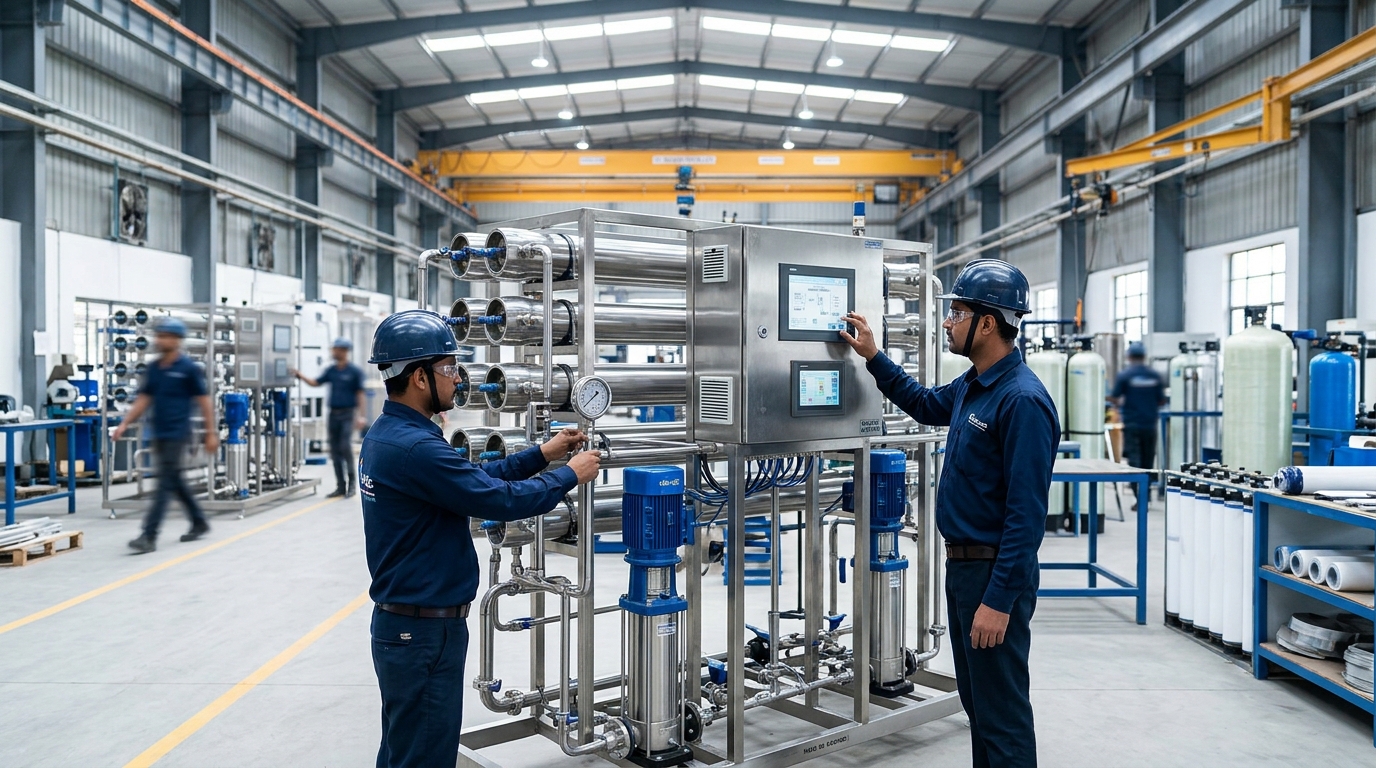
What Are RO Plant Manufacturers in Kanpur?
RO Plant manufacturers in Kanpur specialize in producing Reverse Osmosis (RO) systems designed to purify water, ensuring it is safe for drinking and industrial use. With the growing demand for clean water, choosing the right manufacturer is crucial for both quality and efficiency.
Kanpur, situated along the Ganges, often faces challenges with water quality, including high Total Dissolved Solids (TDS), hardness, and sometimes industrial pollutants or microbial contamination in groundwater. RO technology offers a robust solution by effectively removing dissolved salts, heavy metals, pesticides, bacteria, and viruses, leaving behind pure, potable water. The process involves forcing water under pressure through a semi-permeable membrane, which blocks impurities while allowing pure water molecules to pass through.
RO Plant Manufacturers in Kanpur provide various models tailored to different needs, from residential setups to large-scale industrial applications. Residential units are typically compact and designed for household use, while commercial and industrial systems are built for higher volumes and more rigorous purification demands, often incorporating advanced pre-treatment and post-treatment stages to cater to specific water quality requirements and regulatory standards.
Why Choose an Industrial RO Plant Manufacturer in Kanpur?
Choosing an industrial RO plant manufacturer in Kanpur ensures that your business has access to customized solutions that meet specific water purification needs. Industrial RO systems are built to handle larger volumes, making them ideal for factories, hospitals, and other commercial establishments. These systems typically have higher filtration capabilities and enhanced durability compared to standard residential RO units.
For businesses in sectors like textiles, pharmaceuticals, food and beverage, chemical manufacturing, or power generation, access to consistently pure water is not just a health concern but a critical operational requirement. Industrial RO plants from Kanpur manufacturers are designed to manage flow rates from several hundred liters per hour (LPH) to several thousand LPH, significantly reducing TDS and eliminating contaminants that could otherwise compromise product quality, damage sensitive equipment, or lead to non-compliance with environmental regulations.
Manufacturers often provide comprehensive services, including detailed water analysis, system design, installation, and ongoing maintenance. This ensures that the RO plant is perfectly matched to the raw water characteristics and the specific purity standards required by the industry. Benefits extend beyond mere compliance, encompassing reduced operational costs due to less scaling and corrosion in machinery, improved efficiency in processes, and a higher quality end-product, making them a strategic investment for any large-scale operation.
How Much Do RO Plants Cost in Kanpur?
The cost of an RO plant in Kanpur can vary significantly based on size, capacity, and features. On average, a small residential RO unit might cost around ₹10,000 to ₹25,000. These typically offer capacities ranging from 8-15 LPH and come with 5-7 stages of purification, including sediment, carbon, RO membrane, and sometimes UV filtration. Brands and advanced features like TDS controllers or mineralizers can push prices higher, up to ₹35,000.
For commercial systems, suitable for offices, schools, or small restaurants, capacities range from 25 LPH to 500 LPH. These units usually start from ₹40,000 for a 25 LPH system and can go up to ₹3-5 lakhs for a 500 LPH plant. Factors influencing this range include the material of construction (often stainless steel for durability), level of automation, and the complexity of pre-treatment modules needed to handle incoming water quality.
Industrial systems, on the other hand, designed for capacities upwards of 500 LPH, could range from ₹1 lakh to several lakhs, easily extending to ₹10-50 lakhs or even more for very large, highly customized plants (e.g., 5000 LPH or higher). These large-scale projects involve extensive engineering, robust pre-treatment systems (like multi-media filters, water softeners, activated carbon filters), high-performance membranes, and advanced control panels (PLC-based automation). Their pricing is often project-based, reflecting specific design and installation complexities.
It’s important to obtain quotes from various manufacturers to ensure you’re getting competitive pricing. Additionally, inquire about installation and maintenance costs, which can add to the initial investment. Many residential units include basic installation, but commercial and industrial setups often have separate installation charges depending on the site complexity. Annual Maintenance Contracts (AMCs) are also a significant consideration, typically costing 10-15% of the unit's initial price per year, covering periodic filter changes and service visits.
What Should You Check Before Booking an RO Plant?
Before committing to an RO plant, make sure to check the following, as these factors significantly impact the performance and longevity of your investment:
- Water Analysis Report: The absolute first step is to get your raw water tested. Key parameters to check include TDS, hardness, pH, iron content, turbidity, and microbial contamination. This report will dictate the necessary pre-treatment stages and the overall design of your RO system, ensuring it's effective for your specific water source.
- Specifications: Ensure the RO unit meets your purification needs. Check its capacity (LPH – liters per hour) and filtration rate, making sure it aligns with your daily water consumption. For residential use, 10-15 LPH is usually sufficient. For commercial or industrial applications, accurately calculate peak demand. Also, inquire about the number and type of filtration stages (sediment, activated carbon, RO membrane, UV, UF, mineralizer, TDS controller) and the material of construction, especially for industrial units (SS304/SS316 stainless steel for enhanced durability).
- Manufacturer’s Reputation: Research customer reviews and testimonials about the manufacturer. Look for companies with a long-standing presence in Kanpur and proven expertise in water treatment. Certifications (like ISO for the company or ISI mark for residential products) can be indicators of quality. For industrial projects, ask for case studies or references from similar clients.
- After-Sales Service: Reliable after-sales support is essential for the smooth operation and longevity of your RO plant. Ensure that the manufacturer provides timely and efficient service, has a readily available network of technicians in Kanpur, and stocks genuine spare parts (especially filters and membranes). Inquire about their typical response time for service calls and the options for Annual Maintenance Contracts (AMCs).
- Warranty: A robust warranty can protect your investment and provide additional backing for quality assurance. Understand the warranty period (typically 1 year on electrical parts, less on consumables like filters) and what it specifically covers (e.g., manufacturing defects, pump failure). Be clear on any exclusions, such as damage due to improper use or lack of maintenance.
- Water Recovery Rate & Energy Efficiency: For larger systems, these factors significantly impact operational costs. A higher recovery rate means less reject water, saving on water bills. Energy-efficient pumps and designs can reduce electricity consumption. For residential units, also consider the noise level during operation.
How Long Does It Take to Install an RO Plant?
The installation time for an RO plant can vary based on its complexity and scale. For residential units, installation usually takes about 2-4 hours. This typically involves mounting the unit, connecting it to a water source (like a kitchen tap or under-sink plumbing), routing the drain line, and connecting it to a power supply. The technician will also perform an initial flush and test the water quality.
In contrast, commercial installations, which are larger and may involve dedicated plumbing lines and storage tanks, may require a full day or sometimes two days, depending on the site's readiness. This could include installing pre-treatment filters, connecting to larger water mains, setting up booster pumps, and integrating with existing water distribution systems.
Industrial installations are considerably more complex and may require several days to a week, or even longer for very large-scale projects. The process for industrial plants involves multiple stages:
- Site Preparation: Client's responsibility, ensuring adequate space, proper flooring, electrical points, and water inlet/outlet connections.
- Assembly of Components: Bringing together large pre-treatment units, RO skids, pumps, and control panels.
- Plumbing and Electrical Connections: Extensive piping for raw water, treated water, and reject water, along with robust electrical wiring.
- Testing and Commissioning: Thorough testing of each component, calibration of pressure and flow, initial flushing cycles, and water quality validation.
- Operator Training: Training the client's staff on system operation, basic troubleshooting, and daily monitoring.
It’s advisable to plan for any potential downtime if your operation relies heavily on purified water during the installation phase. For industrial setups, this planning should be part of the overall project management to minimize disruption.
What Are Common Warning Signs That Your RO Plant Needs Maintenance?
To keep your RO plant functioning optimally and ensure consistent water quality, be on the lookout for these warning signs. Addressing them promptly can prevent major breakdowns and extend the life of your system:
- Reduced Water Pressure or Slow Flow Rate: A significant drop in the flow of purified water could indicate clogged pre-filters (sediment or carbon), a fouled RO membrane, or a malfunctioning booster pump. This means your system is struggling to push water through, leading to lower output and potentially higher energy consumption.
- Change in Water Taste or Odor: If the purified water starts to taste unusual, metallic, or smells unpleasant, this is a clear sign that the filters, especially the carbon filter, are exhausted, or worse, the RO membrane itself is compromised. This means contaminants are likely passing through, necessitating immediate attention.
- Strange Noises: Unusual sounds during operation, such as grinding, humming, or excessive vibration, can suggest mechanical problems. This might point to issues with the booster pump, loose fittings, or air trapped in the system, which can lead to pump failure if not addressed.
- Leaks: Any visible leaks from the unit, pipes, or connections should be addressed promptly. Leaks waste water, can damage the surrounding area, and might indicate loose fittings, cracked housings, or damaged O-rings that could compromise the system's integrity and allow contaminants to enter.
- High TDS in Purified Water: If you regularly check the TDS (Total Dissolved Solids) of your purified water and notice a significant increase, it typically means the RO membrane is no longer effectively rejecting dissolved impurities. This could be due to fouling, scaling, or damage to the membrane, requiring cleaning or replacement.
- Excessive Water Wastage (Reject Water): While RO systems produce some reject water, an unusually high volume flowing down the drain might indicate an issue with the flow restrictor, severe membrane fouling, or high incoming TDS. This leads to higher water consumption and increased utility bills.
- Indicator Lights: Many modern RO systems have indicator lights for 'filter change,' 'low pressure,' or 'system malfunction.' Pay attention to these visual cues as they can signal maintenance needs or operational issues.
What Is Included in RO Plant Maintenance Services?
Regular maintenance is vital to the longevity and efficient performance of your RO plant. A typical maintenance service includes a comprehensive check-up and component replacement plan:
- Filter Replacement: This is the most common and crucial aspect of RO maintenance. It involves changing or cleaning the various filters based on their lifespan and usage:
- Pre-filters (Sediment and Activated Carbon): These protect the RO membrane and are typically replaced every 3-6 months for residential units, depending on raw water quality. Cost for a set of residential pre-filters usually ranges from ₹300-₹1000.
- RO Membrane: The heart of the system, it's replaced every 1-3 years for residential use, or when TDS levels in purified water rise significantly. Commercial and industrial membranes have varying lifespans and are a more substantial expense.
- Post-carbon/UV lamp: These are typically replaced every 6-12 months to ensure taste, odor, and microbial safety.
- System Inspection: Technicians will thoroughly inspect all components, including pumps, valves, tubing, electrical connections, and the storage tank. They'll look for any signs of wear and tear, potential leaks, corrosion, or blockages that could impact performance. For industrial systems, this also includes checking gauges, pressure vessels, and control panel functionalities.
- Performance Testing: This involves evaluating the system’s efficiency and water quality. Key tests include:
- TDS Measurement: Comparing raw water TDS with purified water TDS to calculate the membrane's rejection rate.
- Pressure Check: Ensuring optimal pressure throughout the system to facilitate efficient filtration.
- Flow Rate Measurement: Verifying that the system is producing water at its specified capacity.
- pH Testing: To ensure the purified water is within acceptable pH ranges.
- Cleaning and Sanitization: Regular cleaning of components to ensure optimal performance and prevent bacterial growth:
- Storage Tank Sanitization: Essential for residential and commercial units to prevent biofilm and bacterial contamination.
- Membrane Flushing/Chemical Cleaning: For industrial RO plants, periodic chemical cleaning cycles might be performed to remove scaling and fouling from the membranes, restoring their performance and extending their life.
- General Unit Cleaning: Wiping down the exterior and interior components to maintain hygiene.
- Minor Adjustments and Calibration: This may include adjusting pressure settings, tightening fittings, or calibrating sensors to ensure the system operates at peak efficiency.
Choosing the right RO plant manufacturer in Kanpur ensures you have a dependable source for maintaining high water quality. Whether for home, commercial, or industrial use, investing in a quality RO plant and its regular, comprehensive maintenance can lead to significant health benefits, operational efficiencies, and economic savings in the long run. Make informed choices by considering all key factors mentioned here, ensuring that you have a reliable, long-lasting water purification solution that perfectly meets your needs.

Comments
Post a Comment